The market aspects of organic chicken eggs production, its nutritional value, and future outlook of organic poultry feed market
Introduction
In particular, organic foods are characterized by avoiding polluting practices and being healthier for consumers. Livestock production restricts the use of growth hormones, anabolics, or antibiotics. Moreover, the animals are not fed with genetically modified or contaminated food. Animal husbandry practices are restricted, and the animals are provided adequate space for walking, resting and access to the outdoors (Nechaev et al. 2018). Chicken eggs are an essential and daily food throughout the world. It is an excellent source of high-quality protein, even higher than other products of animal origin, such as milk and meat. It contains a rich content of vitamins, lipids, and minerals, and it has even come to be considered a nutraceutical and functional food (Biesiada-Drzazga et al. 2020). Within the next few years, the growing global demand for animal protein could demand eggs as the second food source behind poultry meat (Mulder, 2017). In the case of organic egg production, consumers perceive better quality, safe, healthy, natural, and better taste (Sokołowicz et al. 2019). When consumers buy and consume organic eggs, they pay a higher price because they perceive that organically raised hens live in better conditions than birds raised in conventional systems.
Production of organic eggs
Livestock producers are inclined to seek a competitive advantage by producing value-added and higher-quality products for consumers (Morales and Higuchi 2018). A key role is the establishment of organic farming, as the demand for organic animal products is increasing (Von Borell and Sorensen 2004). Over the last 20 to 30 years, there has been an increase in consumer demand for organic eggs, leading to higher production and market share. Over this time, animal welfare concerns have triggered the reapperance of free-range egg production, especially in highly developed countries, such as Germany and France, which are the largest producers of organic eggs in the world (Yves 2016). Organic eggs are among the most requested products (Sellés et al. 2019). Even so, of the overall egg production, organic egg production represents such a small amount that has been increasing in recent years, especially in the European Union; for instance, in 2018, in Denmark, organic egg-laying hens accounted for more than 31 % of the total production, in Sweden more than 16 % and in Austria and Germany around 12 % (European Commission 2019). According to average cost estimation within the European Union, it is stated that free-range eggs are 48 % higher than conventional caged eggs (European Commission 2004).
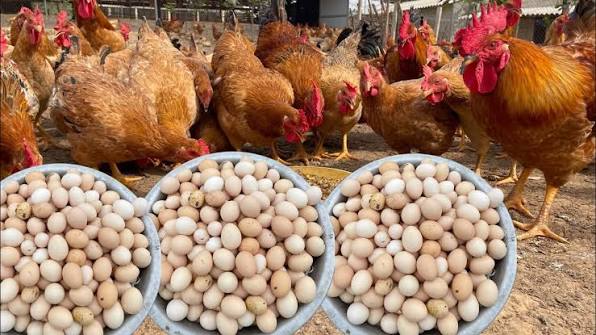
Currently, there is no universal standard for the production of organic food, each country has established its own national standards, including the production of organic eggs (Blair 2008). However, certain globally accepted norms must be met for production to be considered organic. Generally, hens must have access to an open-air, vegetated area with a minimum of 4 m2 per hen, and the flock size must be between 3000 and 10,000 hens. The bird feed consumption must be 100 % organic and not be based on chemicals or genetically modified organisms, amino acids and/or synthesized vitamins cannot be added to the feed (Jespersen 2008; Yves 2016). Also, for production to be categorized as organic, free-range pastures with proper vegetation or supplementary forage materials, such as fresh vegetables, silages, grasses, herbs, or hay, are require. Preventive treatments, such as antibiotics are not allowed. Medical therapies require approval after diagnosis by a certified veterinarian. Beak trimming of birds is prohibited. (Yves 2016).
A further significant factor is the forage needed for organic egg production, which is typically fresh-cut plant material (e.g., grasses, herbs, and vegetables), or dried plant material (e.g., hay, swale), silage (e.g., corn, alfalfa, barley or peas) or mixtures between some of these (Hammershøj and Johansen 2016). Likewise, the various types of pasture, grasses, or forages used in the feed for laying hens contain different nutrients and compounds that are transferred to the eggs and are reflected in their nutritional impact. The ingestion of forages in organic egg production greatly impacts organic egg quality and differs from other types of egg production (Hammershøj and Johansen 2016). Several studies have shown that the egg yolk fatty acid composition is strongly related to the fatty acid content in the feed ingested by the laying hen (Surai and Sparks 2001; Bruneel et al. 2013). Before being able to produce and sell food with the organic label, it is mandatory to have a certification and to satisfy the aspects and criteria established by each country. Achieving a certification implies a significant economic investment for producers who must finance the application, the accreditation, the printing and labeling process, and the annual certification fees. This is one of the main obstacles, especially for small producers who lack adequate financial backing, forcing them to distribute their products through alternative markets or under different brand names (e.g. free-range). These producers do not obtain substantial economic profits since they do not promote their products as “organic” (Amador 2005).
Organic poultry feed market:
The organic poultry feed market is poised for unprecedented expansion, with projections estimating a compound annual growth rate (CAGR) of over 8% through 2026. As consumer demand for ethically sourced, chemical-free poultry products intensifies, industry stakeholders are recognizing the strategic importance of organic feed solutions. This growth is driven by increasing consumer demand for organic poultry products, regulatory support for sustainable farming practices, and technological innovations that improve feed efficiency and quality. The market includes global companies, regional brands and new innovators. Most key players are expanding their product lines and refining their distribution networks to reach more customers eg Cargill Inc., Purina Animal Nutrition, Sunrise Farms, Green Mountain Feeds, Country Heritage Feeds, Scratch and Peck Feeds, Modesto Milling, Kreamer Feed etc.
Comprehensive Segmentation Analysis of the Organic Poultry Feed Market
The Organic Poultry Feed Market is divided by product type, application area, end-use industry and region. The product Modern range ranges from basic options to modern high-performance solutions. Regionally, the Asia-Pacific region is growing faster, while North America and Europe show steady demand. Latin America and the Middle East are opening new avenues as industries expand. This segmentation helps companies focus on the most profitable areas with high potential.
India is growing quickly with digital adoption and new manufacturing capacity. ASEAN countries add low-cost production and rising consumption.
Future Outlook and major challenges in the organic poultry feed market
The Organic Poultry Feed Market is expected to witness sustained global growth driven by innovation, digitization, and emerging economy participation. Regional trajectories will be shaped by sustainability alignment, AI integration, supply chain modernization, and geopolitical shifts. Long-term attractiveness remains strongest in Asia Pacific, followed by North America and selective MEA hubs, as organizations prioritize resilience and advanced capabilities. Regulatory restrictions, high production costs, and health or environmental concerns pose significant hurdles. Market entry barriers and competition also affect growth.
Conclusions
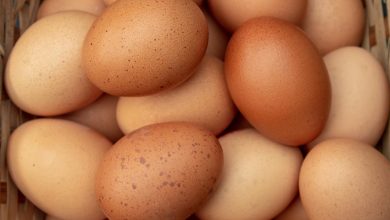
The nutritive value that organic eggs produce is better in certain nutrients, compared with mass production or caged egg. Organic eggs are a little different in their visual aspect but there are not related to the quality of the egg. Different aspects stand out in the food of the hens, free of chemical products; they may eat grasses, foliage, or natural herbs which give certain nutrients to eggs. In developing countries where there is a bad economy, paying for organic eggs is difficult for most of the population because, in general, there are people who have low salaries and informal jobs. They are not only more expensive for consumers but also for producers who must meet the necessary certification requirements to be labelled as organic. Organic poultry feed market enhances product quality, extends shelf life, and improves consumer appeal. It also contributes to functionality, protection, or performance. Organic poultry feed market helps brands stand out by improving visual appeal, functionality, or sustainability. It adds value to products and enhances marketability.
Von Borell, E., & Sørensen, J. T. (2004). Organic livestock production in Europe: aims, rules and trends with special emphasis on animal health and welfare. Livestock Production Science, 90, 3–9. https://doi.org/10.1016/j.livprodsci.2004.07.003
Yves, N., Maureen, B., & Filip Van, I. (2016). 20. Organic and free-range egg production. improving the safety and quality of eggs and egg products, Volume 1 – Egg Chemistry. Production and Consumption. 632p. Ebook ISBN: 9780857093912.