Kadaknath Meat
Anshul Kumar Khare*, P.K.Singh, Swati Gupta and Surbhi Yadav
Department of Livestock Products Technology
College of Veterinary Science and Animal Husbandry, NDVSU Jabalpur
*Corresponding author Email-akksagar@gmail.com
Introduction
Poultry refers to domesticated birds raised for various purposes, primarily for their meat and eggs. Some common types of poultry include chickens, turkeys, ducks, geese, and quails. These birds are specifically bred and managed within the poultry industry to meet the demand for poultry products. Indian poultry sector has attained very fast growth in last decades; as a result India holds third position in egg production and fifth position in broiler production in world. The total poultry population of India is 851.81 million which 16.8% higher than previous census. Total meat production in India is appprox.10MT out of which poultry meat production is 4.5MT (pib.gov.in). Out of 20 registered chicken breeds of India Kadaknath is a famous breed which is popular for disease resistance, climate resistant and ability to protect themselves from predators.
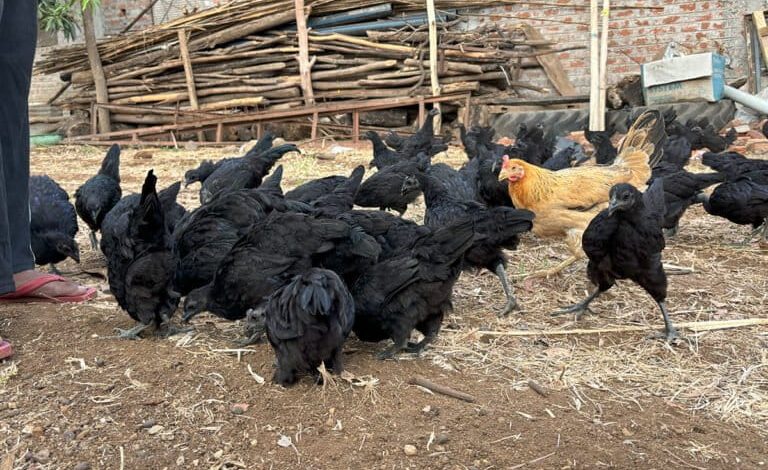
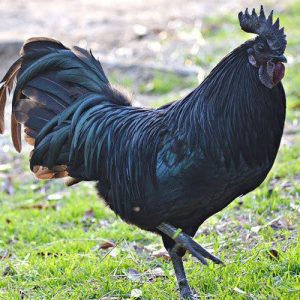
Kadakanath is native of Jhabua and Dhar district of Madhya Pradesh and it is also found in Bastar Chhattisgarh. Kadaknath chickens are now found in 117 districts across 20 Indian states, as well as in some Asian nations. While the overall market is growing, there have been reports of declining populations in specific areas like Jhabua, Madhya Pradesh, where the breed originated. This may be due to factors like high demand and genetic erosion. Indigenous tribes such as Bhils and Bhilalas in these areas have conventionally reared this breed as part of their poultry-keeping practices. The communities, in particular, have maintained Kadaknath for generations, integrating it into their cultural tradition, cuisine, and medicinal habits.(Swati et al., This breed is notable by its unique black pigmentation, which extends to its feathers, skin, meat, bones, and internal organs due to high melanin levels. Its adaptability to exigent environmental conditions, disease resistance has contributed to its survival and perpetuation among rural farming communities. Kadaknath was granted a Geographical Indication (GI) tag in 2018, officially establishing its status as a native poultry breed of Madhya Pradesh because of unique characteristics (Finanacial express/cited 5/6/25)
Jet Black, penciled, and golden are three varieties of kadaknath breed. Kadaknath breed is popular for its black meat and known as black meat chicken or Kalamasi. Kadaknath chicken breed is famous for its meat quality, texture and taste. The meat of this breed is considered to be a delicacy due to its perceived taste and flavour. Furthermore, the meat of this breed is presumably known to have better nutrient profile as compared to meat of other breed. Therefore, Kadaknath meat is being sold in niche market with a premium price (2 to 3 times) than that of broiler meat.
Kadaknath Meat Characteristics
Ayyam Cemani, Kadaknath and Silkie are 3 different breeds of Black Meat Chicken are available in the world (Kumar et al., 2021). All of them have dark brown and black flesh. These breeds have attracted tremendous attention due to its unique black colour hyper-pigmentation. The hyper-pigmentation is due to the fibromelanosis (Fm) phenomenon caused by the excessive deposition of eumelanin in almost all parts of the body including muscles and internal organs. The cooked meat is also greyish-black in color, which may not give a pleasant and appealing look to our eyes; however, it has a delicious flavour.
The dressing percentage is generally lower in the Kadaknath and it varies from 61-65% (Arora et al. 2011., Haunshi et al. 2021., Bhardwaj et al. 2006 Rajkumar et al. 2016). Thick feather covering or greater feather percentage relative to body weight of this breed might be contributing to the lower dressing percentage. Abdominal fat (as a proportion of dressed weight) at 12 weeks age was low in Kadaknath (0.11%) when compared to White Rock (1.74%). However, it was higher than that of Aseel Peela (0.02%) and WLH (0.07%) breeds (Arora et al. 2011). These findings suggest that native chickens including Kadaknath have less fat content in their body.
The texture of the breast and thigh meats of Kadaknath was significantly tougher than those of White Rock breed. However, there was no difference in the texture of breast meat of Kadaknath, Aseel Peela and WLH breeds although the texture of thigh meat of Kadaknath was better than Aseel Peela and WLH breeds (Arora et al. 2011). Texture profile values are comparatively higher for kadaknath breed than other breeds

Proximate composition of kadaknath meat
| SNo. | Parameters | Percent |
| 1 | Moisture | 73-75 |
| 2 | Protein | 18-25 |
| 3 | Fat | 0.73-1.03 |
| 4 | Ash | 1.01 |
| 5 | Phosphorous | 0.18 |
| 6 | Calcium | 0.08 |
| 7 | Cholesterol | 184.75 mg/100 gm |
| 8 | Gross Energy (Kcal / kg) | 1557.67 ± 31.99 |
Ganaraj et al., (2020)
The moisture content of thigh and breast muscles of Kadaknath were higher than Aseel breed slaughtered at the age of 20 weeks. Protein content was significantly higher in breast muscle while fat content was significantly higher in thigh muscle. No difference was observed between Kadaknath and Aseel in protein and fat percentage of respective muscles (Haunshi et al., 2013b). However, protein content was higher, while fat and moisture contents were lower in emulsion and nuggets prepared from the meat of Kadaknath as compared to those of Aseel, Vanaraja and commercial broilers (Singh et al. 2016). Detailed investigations on the comparative assessment of nutrient contents of meat of Kadaknath in comparison with commercial broiler chickens are required. It has been found that the total protein content in Kadaknath meat is 25.47 per cent. This could be due to better protein assimilation during digestion and absorption. Kadaknath meat and eggs are rich in nutrients, vitamins, and protein; and have less fat and cholesterol. In another report, fat content was 0.73-1.03 per cent in Kadaknath meat, 13- 25 per cent in other chicken breeds, while cholesterol level was 184.75 mg/100 gm in Kadaknath meat and 218.12 mg/100 gm in other breeds. It is reported that low cholesterol content in indigenous poultry breed makes these birds lean due to high metabolic activity. High levels of 18 amino acids, 8 of which are essential for humans, are found in Kadaknath meat. the level of amino acids, particularly those known to impart a sweet and umami (savoury) taste to the meat, were higher in the Kadaknath Vitamin B1, B2, B6, B12, C, E, niacin, calcium, phosphorus, iron, nicotinic acid are found in the meat of Kadaknath
The Central Food Technological and Research Institute (CFTRI), Mysore, studied the medicinal properties of Kadaknath meat and found it suitable for heart patients as it increases blood supply to the heart (pureecoindia.in). A recent Nature Communications report suggests that black meat may positively treat atherosclerosis, as more linoleic acid and less cholesterol means protection against stroke, heart attack, and other essential heart conditions. This could be due to improving haemoglobin synthesis and angiogenesis. (https://www.hindustantimes.com/). Even the Chinese people have been using their dark meat chicken in a traditional way to treat various ailments for many years.
Kadaknath meat also shows aphrodisiac property and peculiar effectiveness in treating women’s discuss, sterility, Menoxenic (abnormal menstruation), habitual abortion although scientific studies related to these are scanty. Kadaknath has special medicinal value in homeopathy and a particular nervous disorder. Kadaknath meat is helpful in pulmonary problems.
Kadaknath chicken meat also possesses strong antioxidant properties, which contribute to its health benefits. The presence of natural antioxidants suggests that Kadaknath meat could have potential applications in the food, nutraceutical, and cosmeceutical industries. Kadaknath meat also exhibits high potential for value addition.
Conclusion
Kadaknath meats is highly nutritious proteineous food with low fat and cholesterol values and containing all amino acid and vitamins and have larger market value with high prices due to its medicinal and nutraceutical quality. Despite its advantages, Kadaknath faces challenges such as low productivity and competition from commercial breeds. However, rising demand for organic and nutrient-rich foods presents new opportunities for its conservation and commercialization. Supporting Kadaknath farming not only helps preserve genetic diversity but also strengthens rural livelihoods and sustainable agriculture, making it a valuable asset for both health-conscious consumers and the poultry industry.
References.
Arora, G.; Mishra, S.K.; Nautiyal, B.; Pratap, S.O.; Gupta. A.; Beura. C.K. & Singh, D.P. Genetics of hyper pigmentation associated with the fibromelanosis gene (Fm) and analysis of growth and meat quality traits in crosses of native Indian Kadaknath chickens and non-indigenous breeds. Br. Poult. Sci., 2011, 52, 675-685. doi: 10.1080/00071668.2011.635637
Bhardwaj, R. K., K. Shive, P. Devesh, K. Ashok, and R. K. Sharma. 2006. “Study of Growth, Reproductive and Carcass Traits in Purebred and Crossbred Chicken.” Indian Journal of Poultry Science 41: 301–303.
by delineating superior functional attributes of its meat. Sci.Rep., 12(1): 1-12.
Famous Kadaknath chicken meat from Jhabua of Chattisgarh gets Geographical Indication tag. The Financial Express. 2018
https://pureecoindia.in/black-chicken-meat-is-healthy/ 15, February 2022. [Accessed on 5.06.2025].
https://www.hindustantimes.com/columns/try-black-chicken-to-improve-your-heart-health/story-zVJ74nenZpNt3tBIIelF1N.html Apr 01, 2018 [Accessed on 05.06.2025].
https://www.imarcgroup.com/indian-poultry-market
https://www.pib.gov.in/PressReleasePage.aspx?PRID=2077745#:~:text=The%20total%20Meat%20production%20in,million%20tonnes%20in%202014%2D15.[Accessed on 05.06.2025].
- Tensingh Gnanaraj, A. Shanmuga Sundaram, K. Rajkumar, R. Narendra Babu. Proximate Composition and Meat Quality of Three Indian Native Chicken Breeds.
Rajkumar, U., M. Muthukumar, S. Haunshi, M. Niranjan, M. V. L. N. Raju, S. V. Rama Rao, and R. N. Chatterjee. 2016. “Comparative Evaluation of Carcass Traits and Meat Quality in Native Aseel Chickens and Commercial Broilers.” British Poultry Science 57 (3): 339–347. doi:10.1080/ 00071668.2016.1162282
Sharma, R., Sehrawat, R., Ahlawat, S., Sharma, V., Parmar, A., Thakur, M.S., Mishra, A.K. and Tantia, M.S. 2022. An attempt to valorize the only black meat chicken breed of India
Singh, R. P., C. M. Shafeeque, S. K. Sharma, R. Singh, M. Kannan, K. V. H. Sastry, S. Raghunandanan, J. Mohan, and P. A. Azeez. 2016a. “Effects of bisphenol-A on Male Reproductive Success in Adult Kadaknath Chicken.” Ecotoxicology and Environmental Safety 128: 61–66. doi:10.1016/j.ecoenv.2016.02.012.